


I was a beta user of LinkedIn's newsletter function several years ago. At first, it felt like a cheat code! My LinkedIn newsletter was growing hundreds of subscribers per week—and I wasn't really doing anything to make it happen.
LinkedIn was clearly leaning into these newsletters. Every issue I sent not only arrived in subscribers' inboxes, but in their push notifications too. Dedicated push notifications and an email for every article published through the newsletter felt like such a boon of attention.
But then I soured on it.
The product was really underdeveloped. Formatting options were limited (and frustrating), and the analytics were virtually nonexistent. There was no visibility into which links were being clicked (or how often). And, of course, there's no direct access to these subscribers' email addresses—LinkedIn owns the relationship.
As visible engagement (reactions, comments) on these newsletters declined, I started questioning whether the juice was worth the squeeze. Eventually, I gave up on my LinkedIn newsletter despite having more than 40,000 subscribers.
But a couple of months ago, a member of The Lab shared how he had "cracked email growth" for his Kit newsletter by leveraging LinkedIn newsletters.
The Goal
Vojtech Vosecky is one of the most prominent voices in the circular economy. He believes in a world without waste, and he's found a huge audience on LinkedIn—nearly 185,000 followers, to be exact.
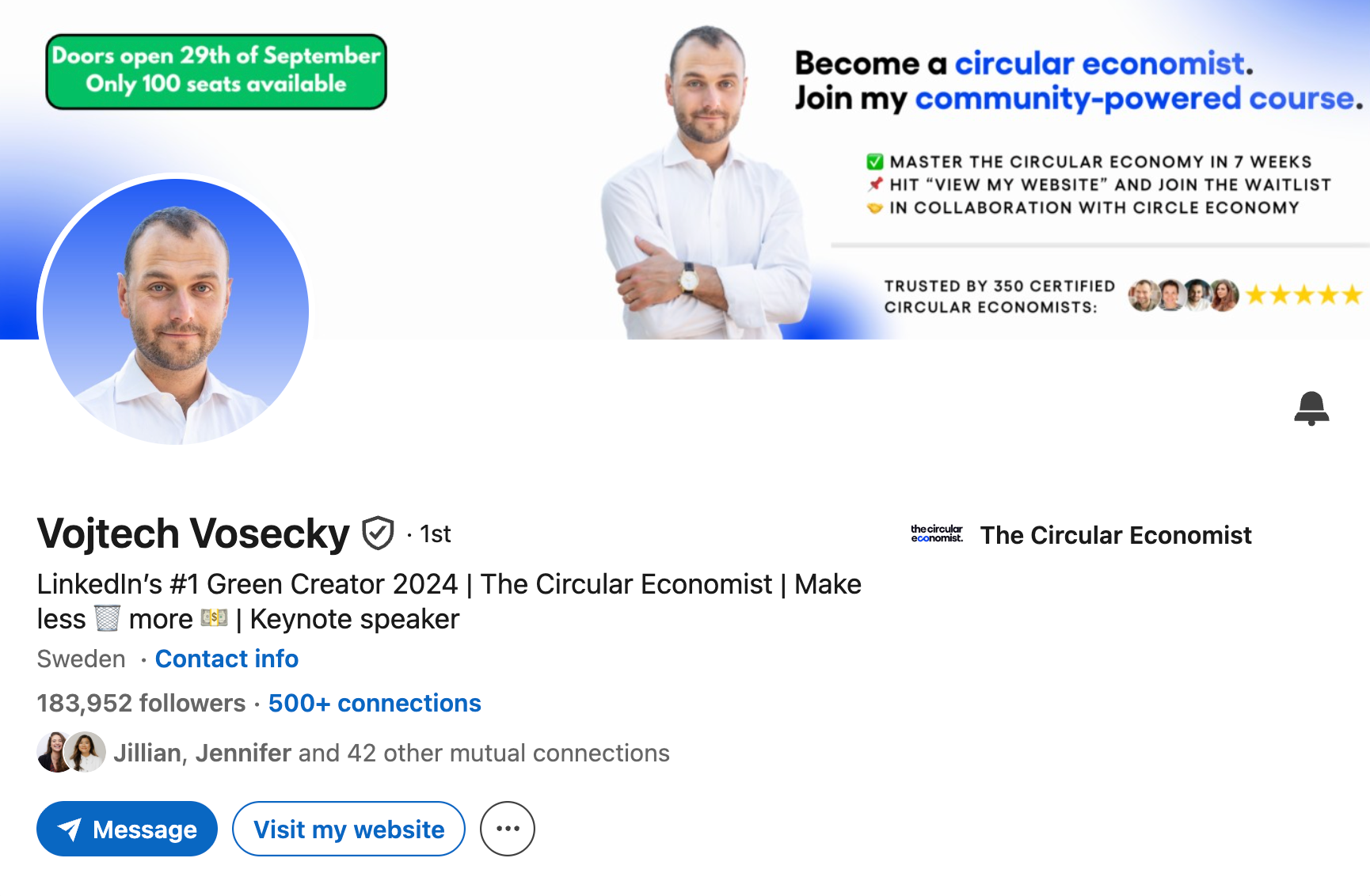
He has a cohort-based course and recently built a membership. He wanted to grow his newsletter in Kit, especially between launches.
Vojtech's Experiment
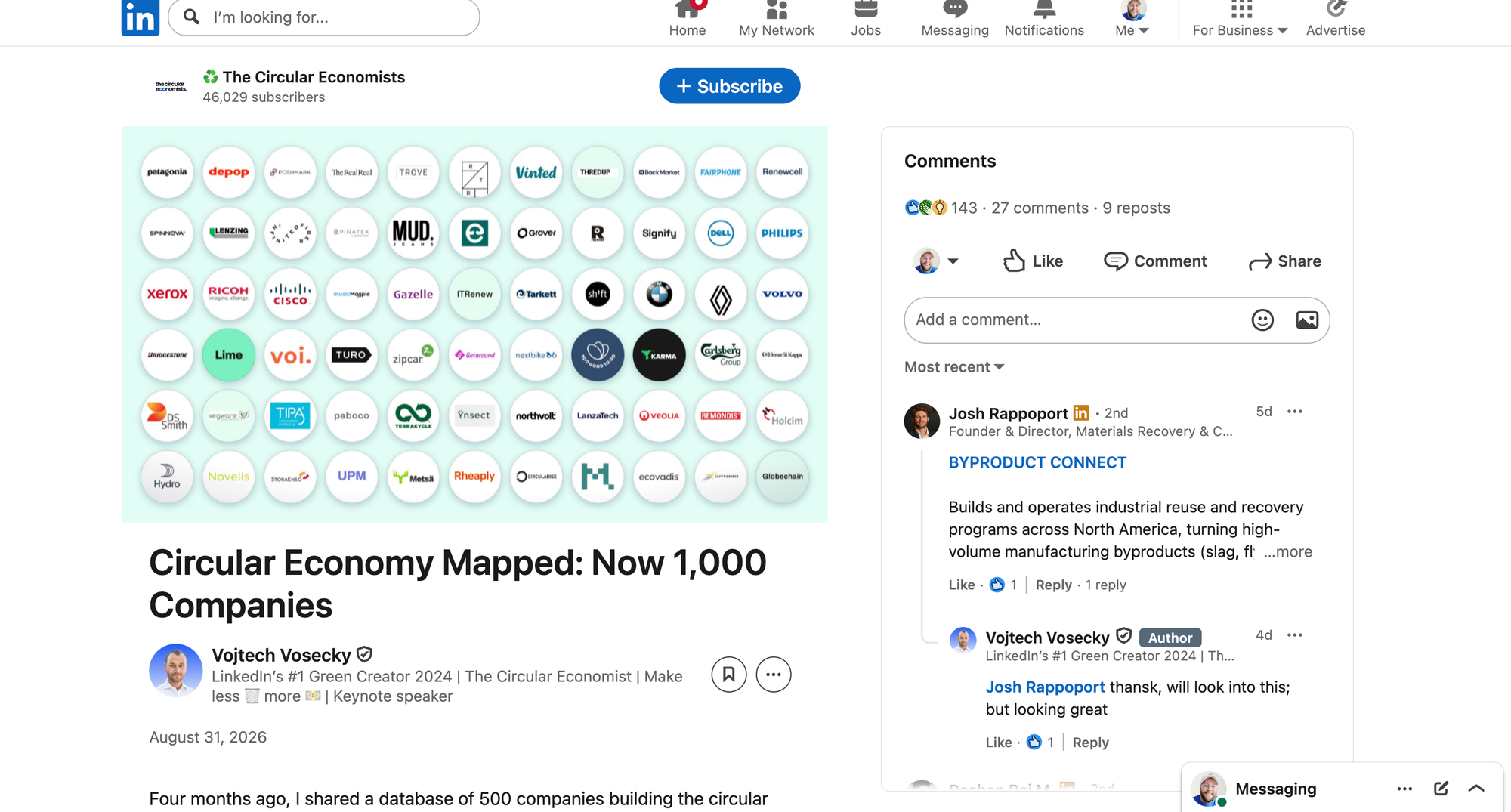
Instead of repurposing into short-form formats, Vojtech thought he'd repurpose the full long-form article into a LinkedIn newsletter. But the real breakthrough came when he combined this approach with:
- Job listings
- Lead magnets
Now, his LinkedIn newsletter wasn't just a repost of his long-form writing; it was also an introduction to resources his readers really wanted (and would trade their email address for).
Here's an example:
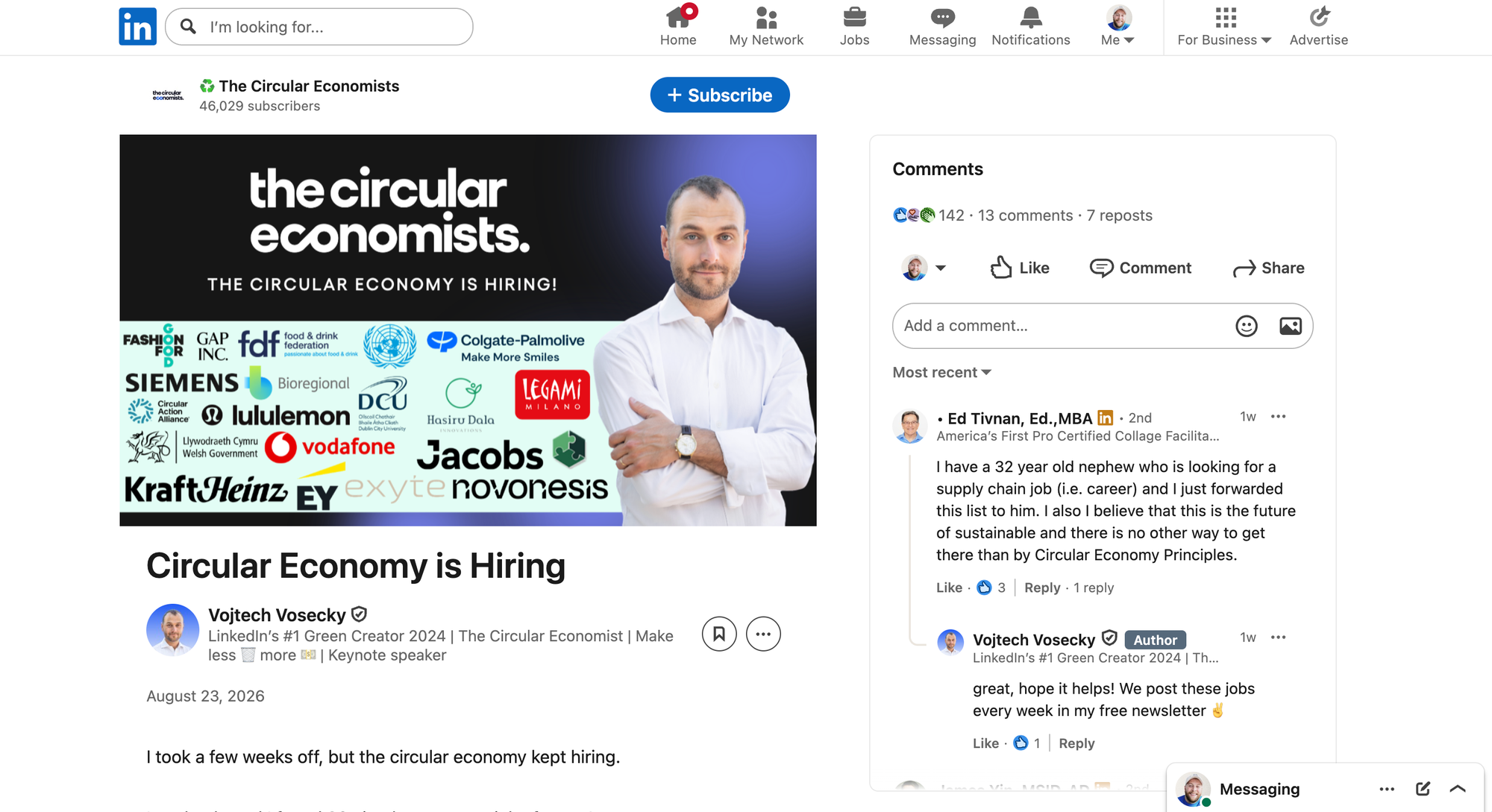
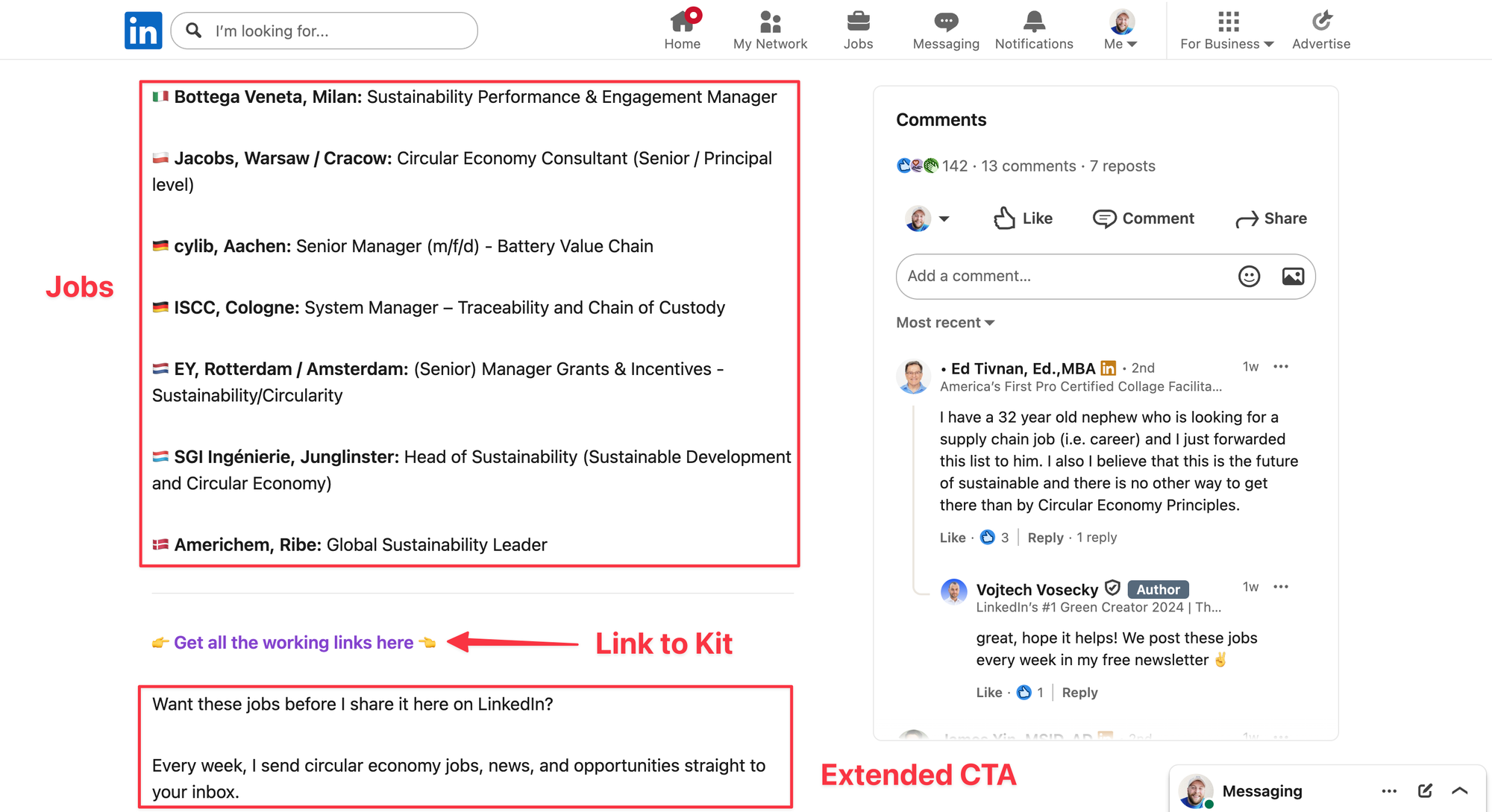
Once you click the link, you land on his Kit profile page where he shares all the latest editions of his newsletters.
Crucially, these newsletters are gated for subscribers only:
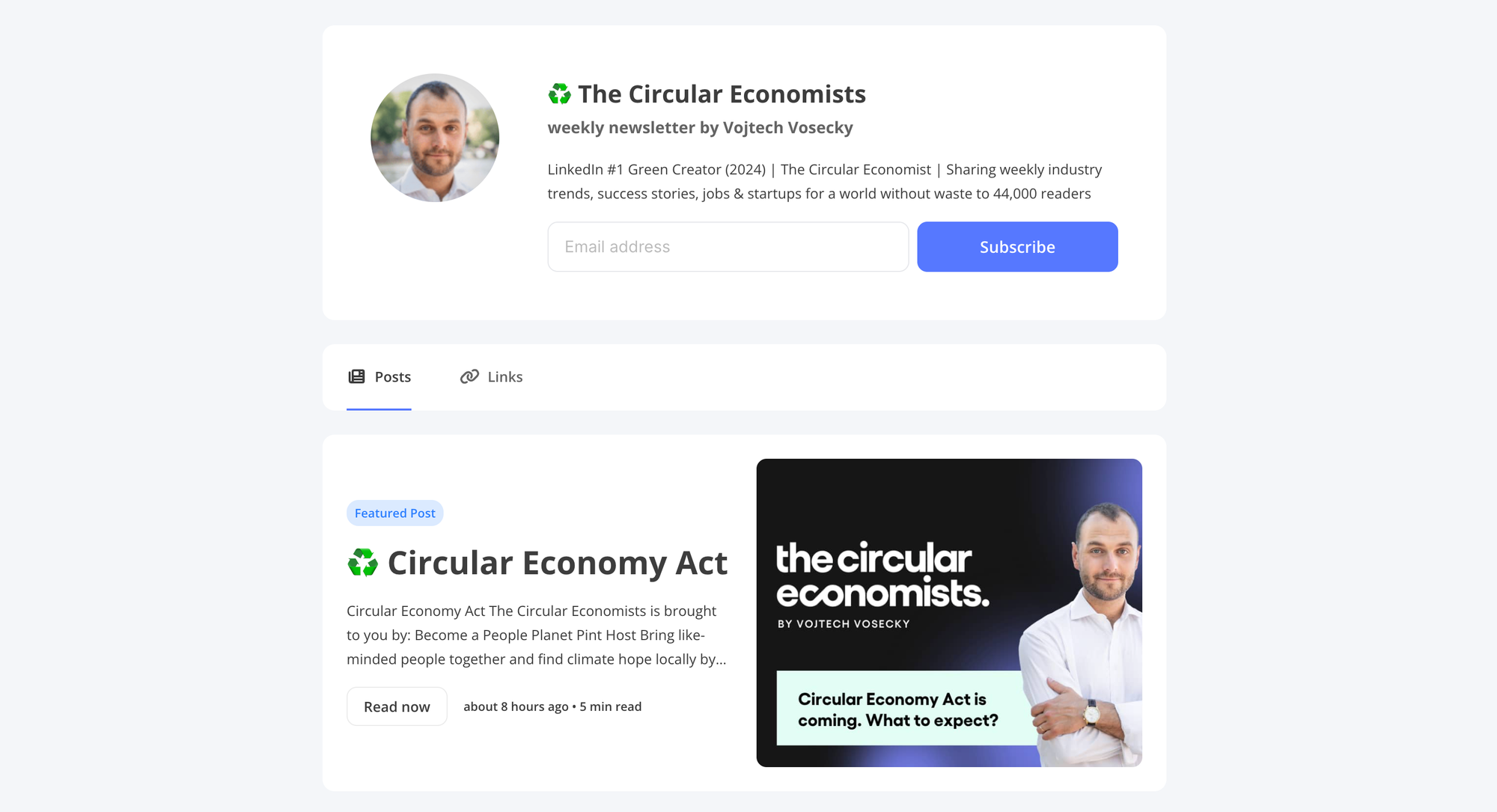
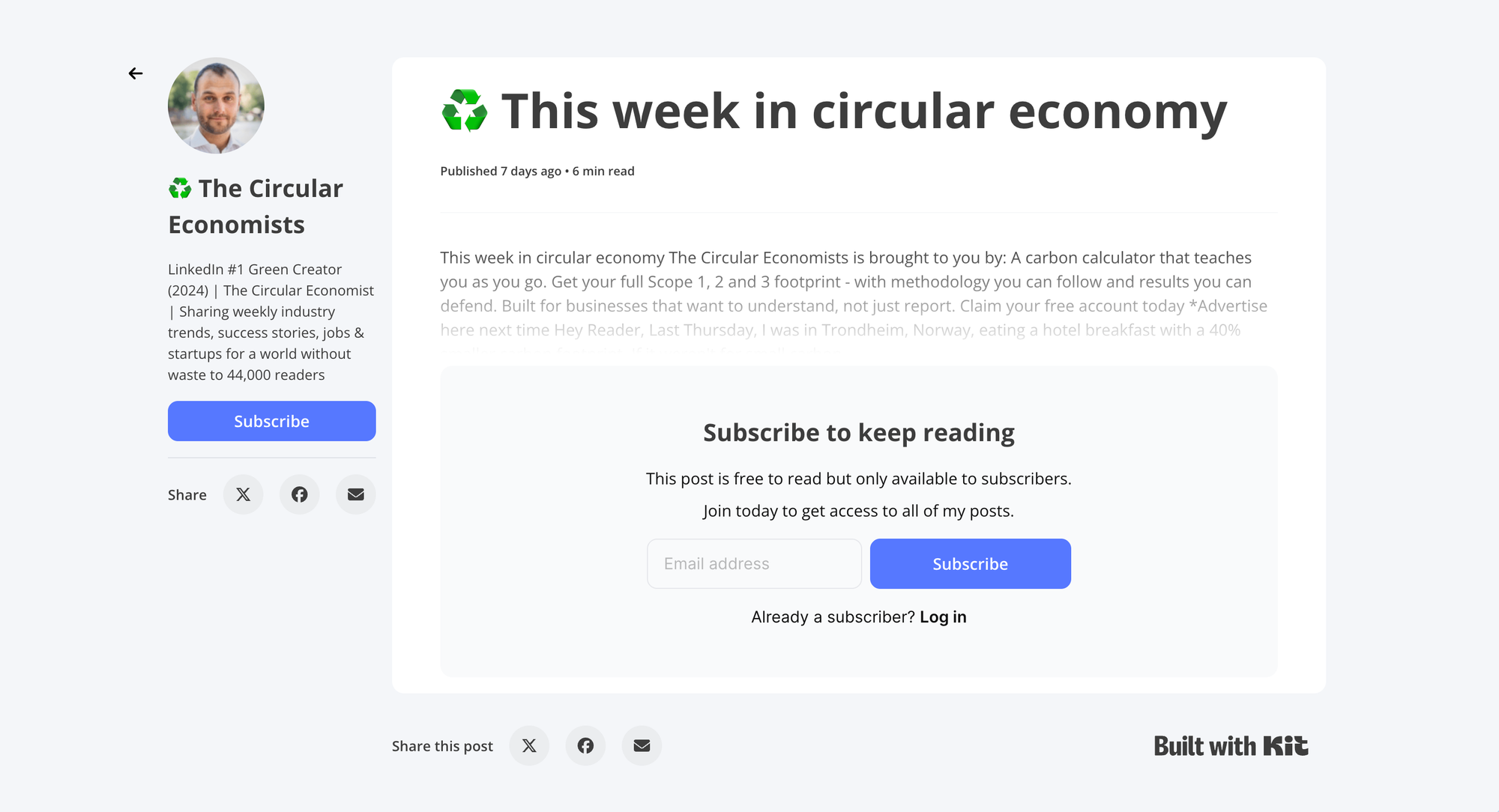
Once you subscribe, you can view the entire issue (including those job listings) and receive future emails too.
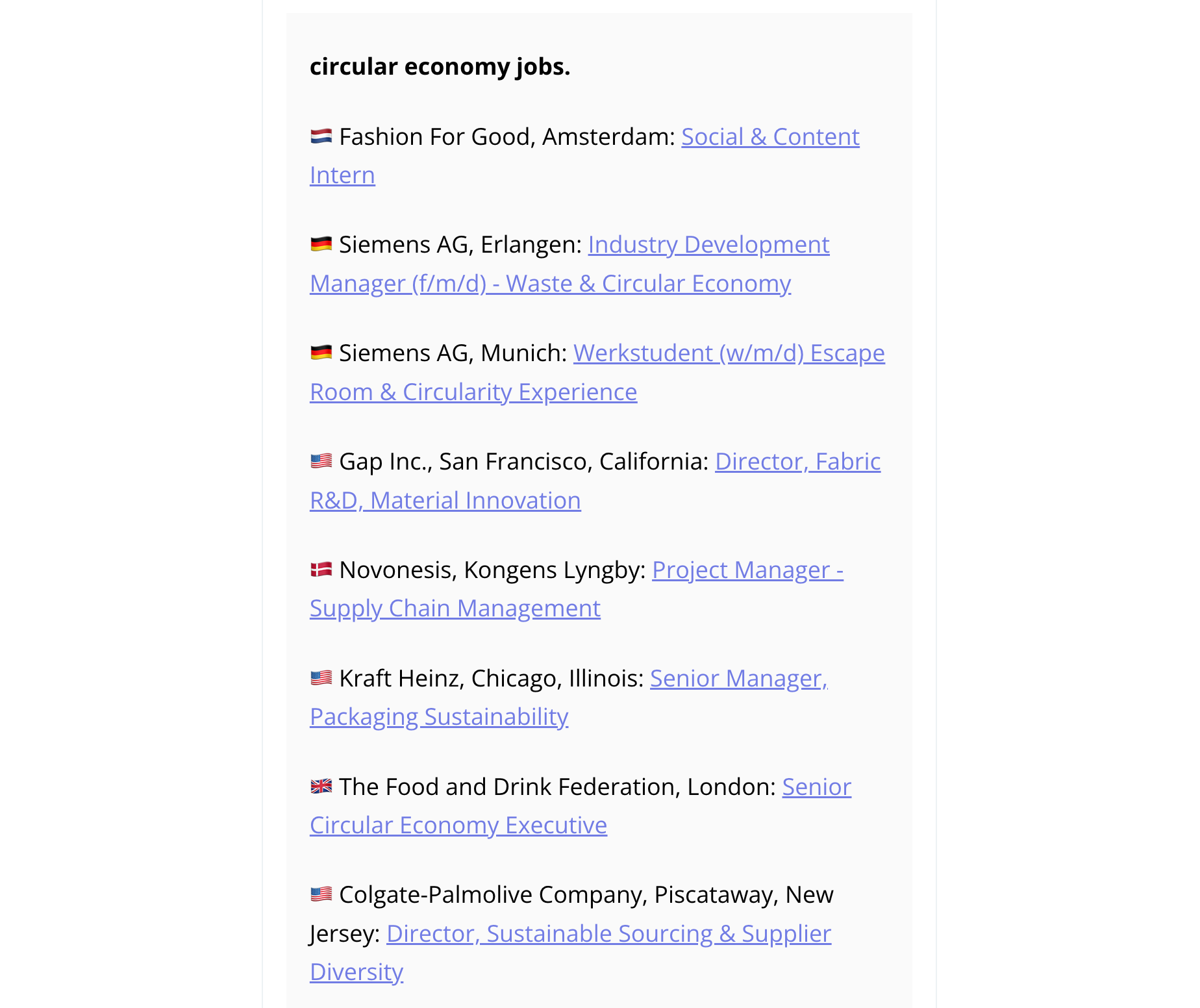
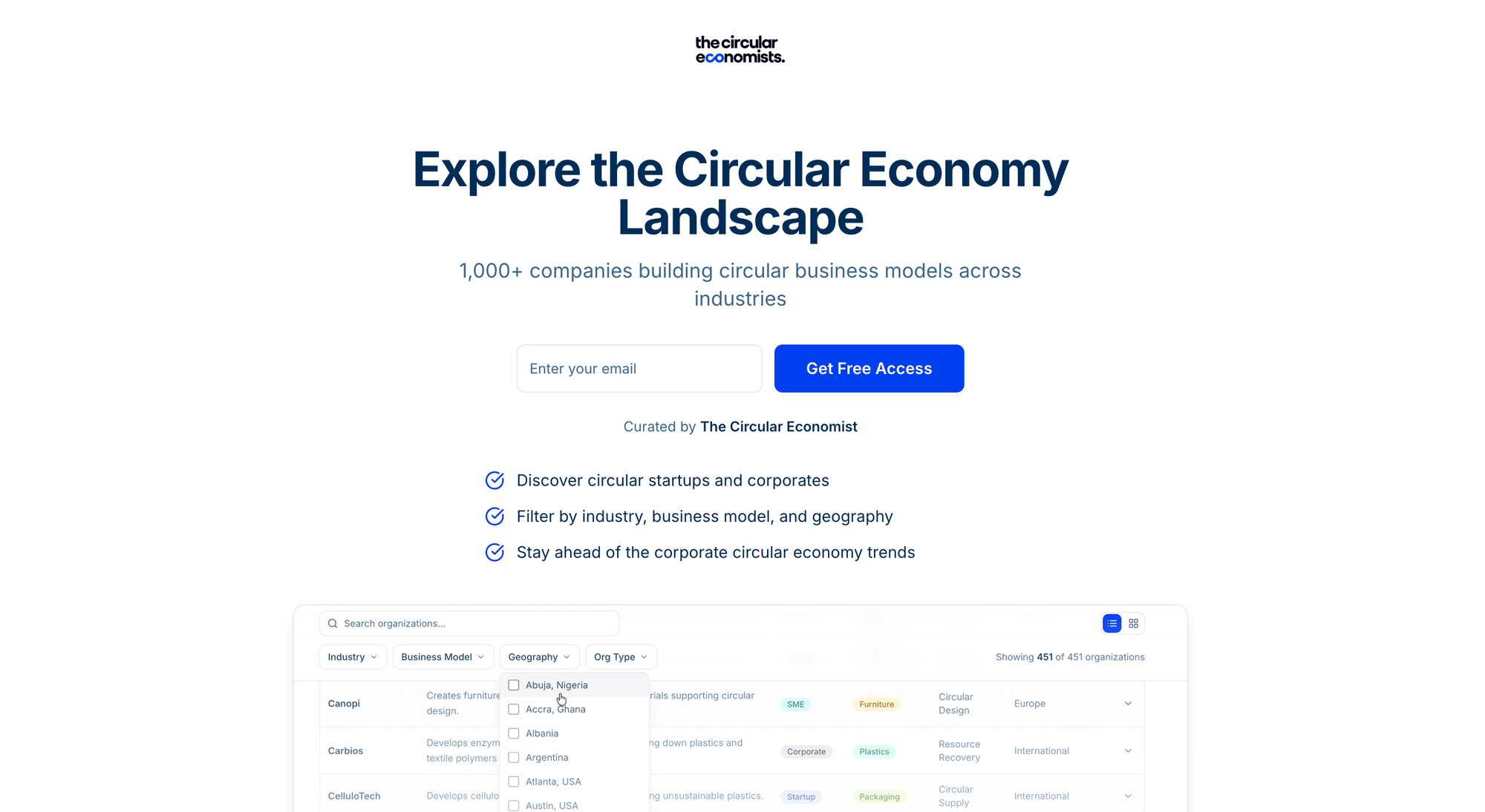
Besides job listings, Vojtech also promotes, improves, and re-promotes proven lead magnets. He found that vibe-coding interactive tools like a database of companies hiring in the circular economy was another great bridge from his LinkedIn newsletter into his own email system:
The Results
Vojtech says he received ~24,000 LinkedIn subscribers within 24 hours of launching the LinkedIn newsletter (LinkedIn notified his followers of the newsletter). Since then, this strategy has brought him ~100 new subscribers in Kit per send, and as many as ~500 subscribers.
Our Take
This is a really smart strategy. The good news is that LinkedIn has improved its newsletter analytics, so you can see some click stats now.
The question we often hear with this strategy is, "What if someone subscribes to both newsletters and you're just repurposing content?"
This "problem" is likely overstated. Sure, it happens, but people aren't paying super close attention—unless they're a superfan, they probably won't notice the same content coming twice within a week. That said, this is why I'd recommend repurposing your newsletters on a slight delay.
For example, this newsletter was sent via Kit on Sunday, Sept. 6. If I publish a LinkedIn newsletter every Wednesday, I would send an issue from a week or more ago to avoid duplication. Plus, that delay is an added reason to subscribe to your main newsletter—you get the best content before anyone else.
As an added bonus, I've heard from some other sources that LinkedIn articles (including newsletter editions) are a major source for LLMs. So, if you're thoughtful, you can double-dip on the benefits here while mostly repurposing your existing assets.
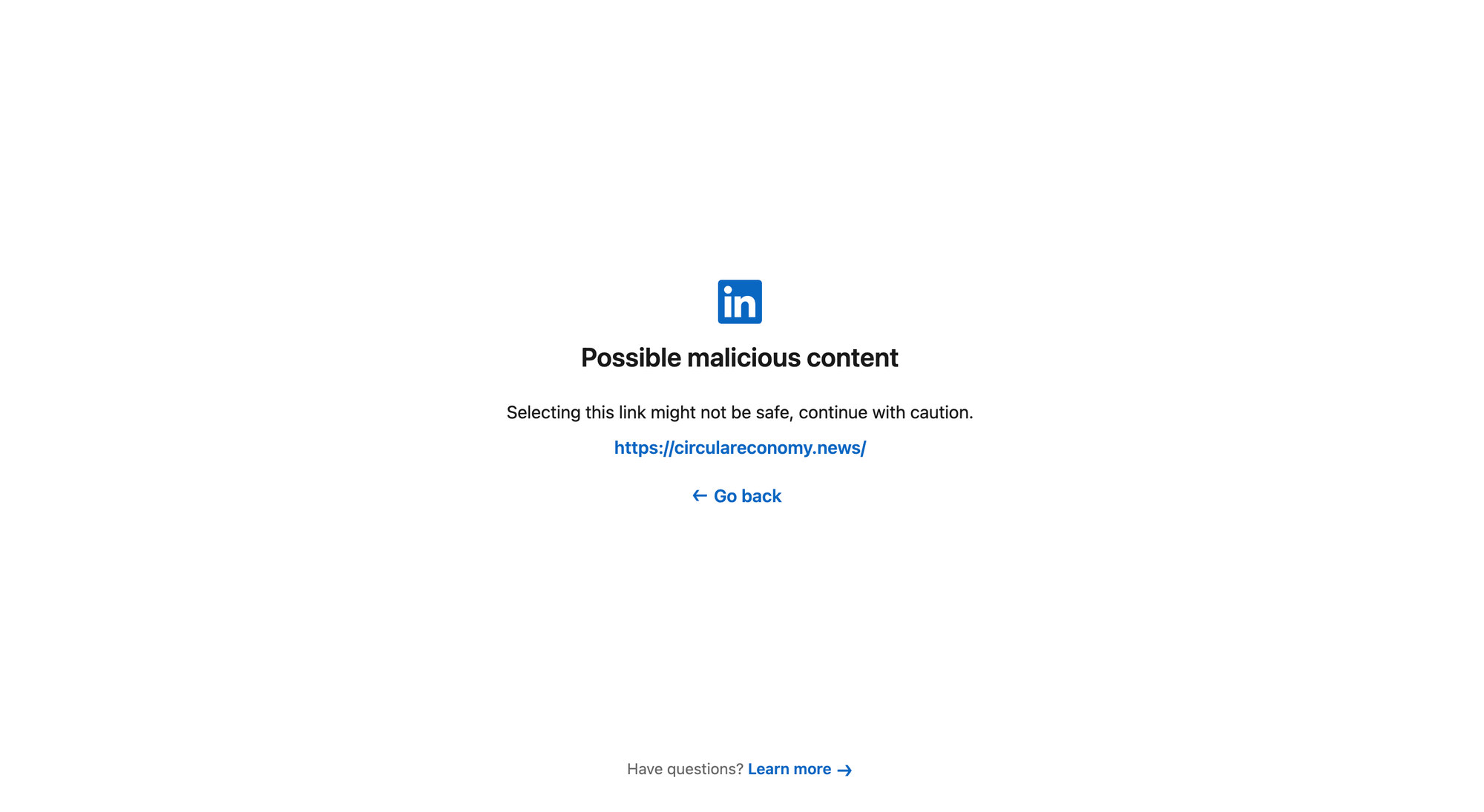
It's not perfect. LinkedIn doesn't seem to love external links and sometimes flags them as malicious, or sometimes even breaks.
But given the available options for organic email list growth, this has high potential with little additional effort or risk.
Learn from creators like Vojtech
This issue was inspired by an experiment shared in our membership, The Lab. Vojtech shared it with us back in April, and he's still using this strategy!
If you want to learn from creators like Vojtech in real time, join us.
