


I can see this being proactive (you need a skill you don’t have or want to grow something you initially validated, and someone else unlocks that upside) or reactive (you’re feeling overloaded and need to get out from under something). But I’ve never heard your framework or decision tree for this process, and I find myself bouncing between feeling confident and hesitant in my own process, now that I’m contracting people around me.
Many thanks for answering this question, and also you’ve got a beautiful family and an even more beautiful first name."
— Jay Acunzo
Of all the things I've done with Creator Science, hiring may be what I'm least confident in. But this question actually has two questions within it:
- WHO to hire
- WHEN to hire
First, I'll share advice I heard from Barrett Brooks, former COO of Kit. He advised a group of us entrepreneurs that your first hire should unlock new revenue and therefore pay for themselves (think: sales or partnerships). When you hire roles that have a direct, immediate impact on the bottom line, your costs go up but at a lower rate to revenue (therefore unlocking even more cash to fund more roles).
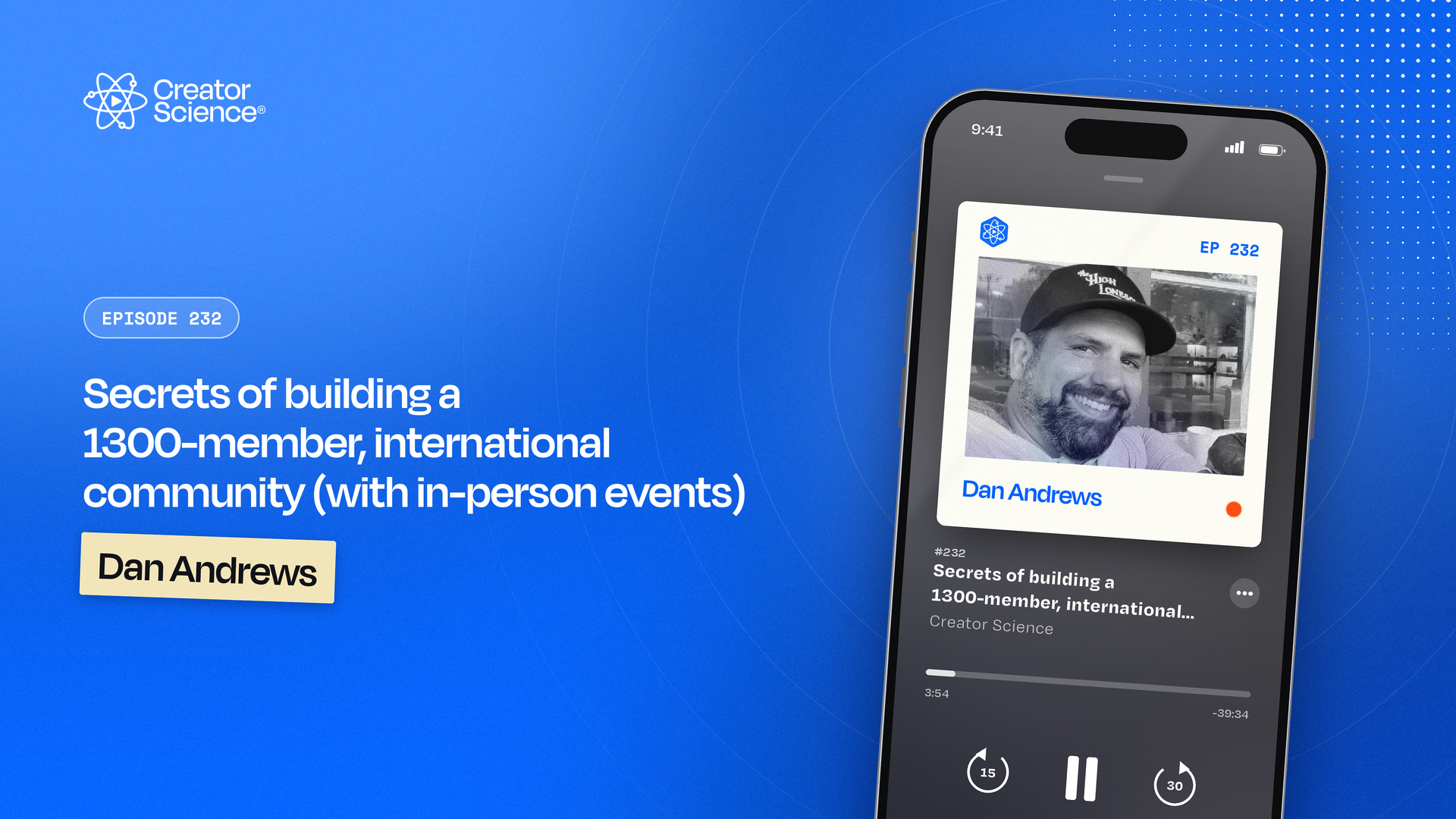
This is really smart. And in my most recent podcast conversation with Dan Andrews, he also encouraged me to hire someone to lead our partnerships, pay them on commission, and incentivize them with bonuses for strong company/brand alignment (so we're not just hawking whatever AI tool is offering to pay us).
 Jay Clouse
Both great pieces of advice that I (unfortunately) did not take.
In the beginning, I simply hired WHEN I had a skill gap and someone WHO could fill it: audio engineering, video editing, thumbnails, graphic design, etc. These were specialists who were hired for specific campaigns or recurring tasks communicating with me as the defacto project manager.
Hiring specialists seemed like a prudent, cash efficient approach. I value high quality work—and when I can't personally deliver that work, I hired people who could (keeping my costs limited to their fee, at least on a cash basis). But this approach wasn't properly valuing my personal time—and a LOT of my time was pulled into managing these specialists. The more specialists I hired, the more time I was spending purely managing those contractors and their deliverables.
This wasn't obvious until we had our daughter. Before kids, I had a lot of time available. And because I wasn't valuing my time in cash terms, throwing that time at project management was a fine strategy to limit the loss of cash flow. But after our daughter was born, my time became more scarce than operating capital. Suddenly, so much of my time was wrapped up in project management that I wasn't able to dedicate as much time to creating content, serving my audience, or my customers.
The Red Queen was in full effect—I felt like I had to run faster and faster just to stay in place.
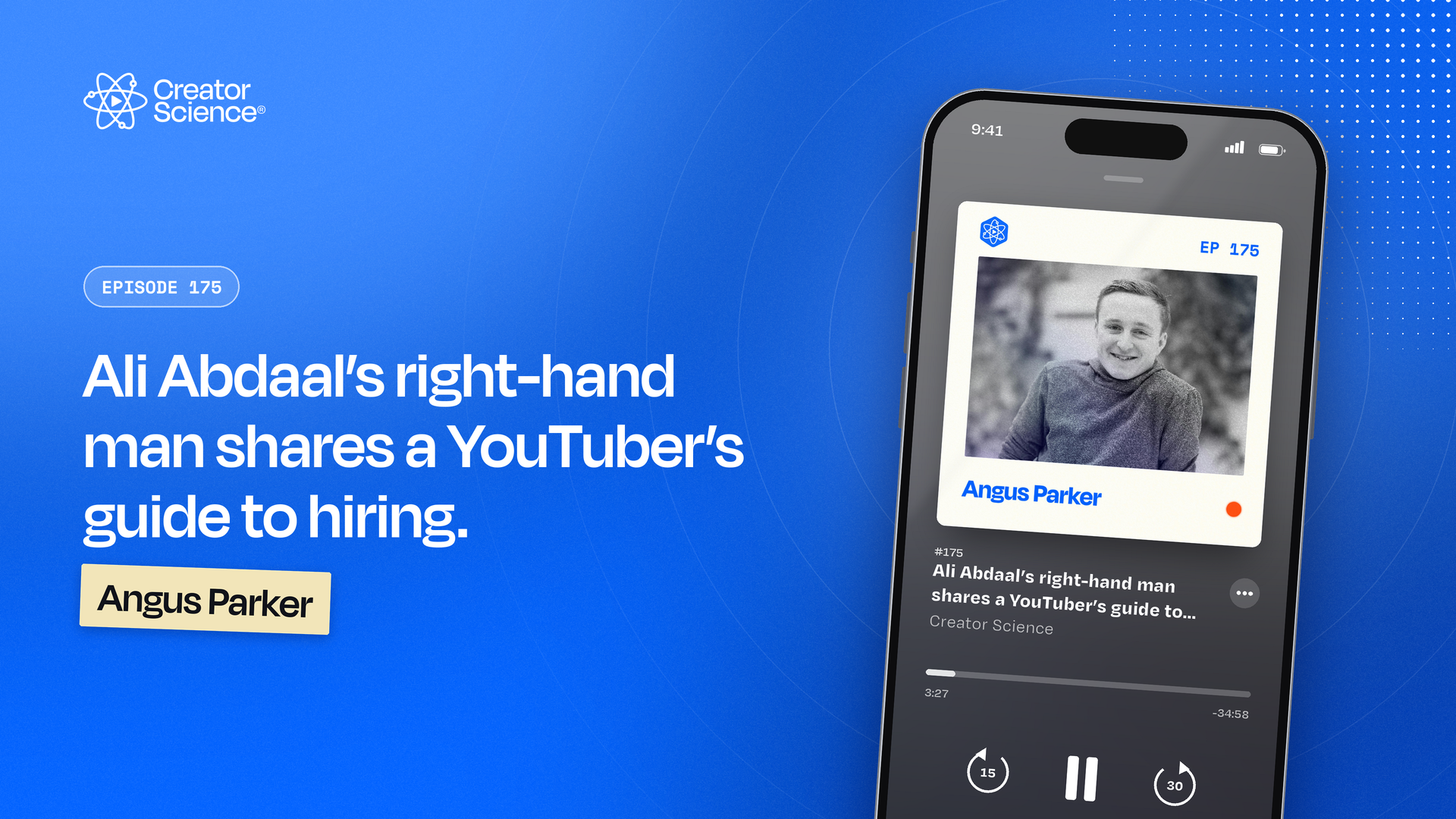
I thought back to a late 2023 conversation with Angus Parker (Ali Abdaal's COO) on the podcast. Angus was adament that your first hire should be a talented generalist rather than a specialist. This way, they can be the utility player wearing all the hats while YOU focus on content. Then, as the business grows, they can hire and train specialists without taking you away from what you do best.
 Jay Clouse
Again, great advice I didn't follow. And I found myself at a crossroads in May 2025: time strapped, cash strapped, and stuck. It felt like both my business and personal life were bursting at the seams, and I had two options:
- Scale back. Do less, probably earn less, but reclaim some more of my time.
- Scale up. Finally hire, delegate, and try to do more.
I decided I could always scale back and do less. But at this moment, when I had momentum and cash flow to support it, I would try and scale up instead.
In his book, Traction, Gino Wickman put language to a distinction between two key roles in an organization: the Visionary and the Integrator.
Here's an excerpt from this article:
Visionaries
Visionary traits
• Idea-rich (ten new ideas a day, some of them brilliant)
• Culture-obsessed (the keeper of what the company stands for)
• Relationship-focused (strong external presence with customers, partners, industry)
• Big-picture thinker (naturally thinks in years, not days)
• High tolerance for ambiguity
• Low tolerance for routine and detail
The five roles of a Visionary
1. New ideas and R&D. Generating the next idea. Spotting opportunities. Testing new directions.
2. Creative problem solving. Tackling the biggest, most ambiguous problems no one else can unpack.
3. Major external relationships. Key customers, partners, industry leaders, investors.
4. Culture. Protecting and evolving what the company stands for.
5. Selling big deals. The Visionary’s passion and credibility close the largest opportunities.
Integrators
Integrator traits
• Operationally disciplined
• Execution-focused
• High emotional intelligence (can manage the Visionary without being threatened by them)
• Pattern-finder (sees the systemic issues the Visionary misses)
• Tolerant of detail and routine
• Low tolerance for ambiguity
The five roles of an Integrator
1. LMA. Leading, Managing, and holding people Accountable for the leadership team.
2. Executing the business plan and P&L results. Owning the numbers.
3. Integrating the major functions. Making Sales, Operations, and Finance work together.
4. Resolving cross-functional issues. The issues that individual functions cannot solve on their own.
5. Communication across the organization. Cascading messages up, down, and across.
Wickman says that combining these two personality types together is "rocket fuel" for growing your organization.
Maybe it's hubris, but I've always felt like I could do both of these roles (I identified as an operator long before I saw myself as any type of company visionary). But even if that's true, performing both roles meant I couldn't do either at 100%—and the business demands both functions running at full capacity.
So if a single person can't be both Visionary and Integrator at full strength, your business is mostly likely to need you in the Visionary seat. By virtue of being your business, you're going to be most incentivized to dream big and be the evangelist.
The challenge is finding someone that you 1) trust and 2) vibe with who is also 3) great at operatinos and 4) available for hire.
This felt very hard. Not just hard, but also expensive and risky, without a clear timeline for an ROI.
Hiring, sifting through applications, and interviewing all felt like a giant undertaking that I didn't have time for. So I took my typical hiring approach: I'd talk loudly about what I was looking for and see who showed up.
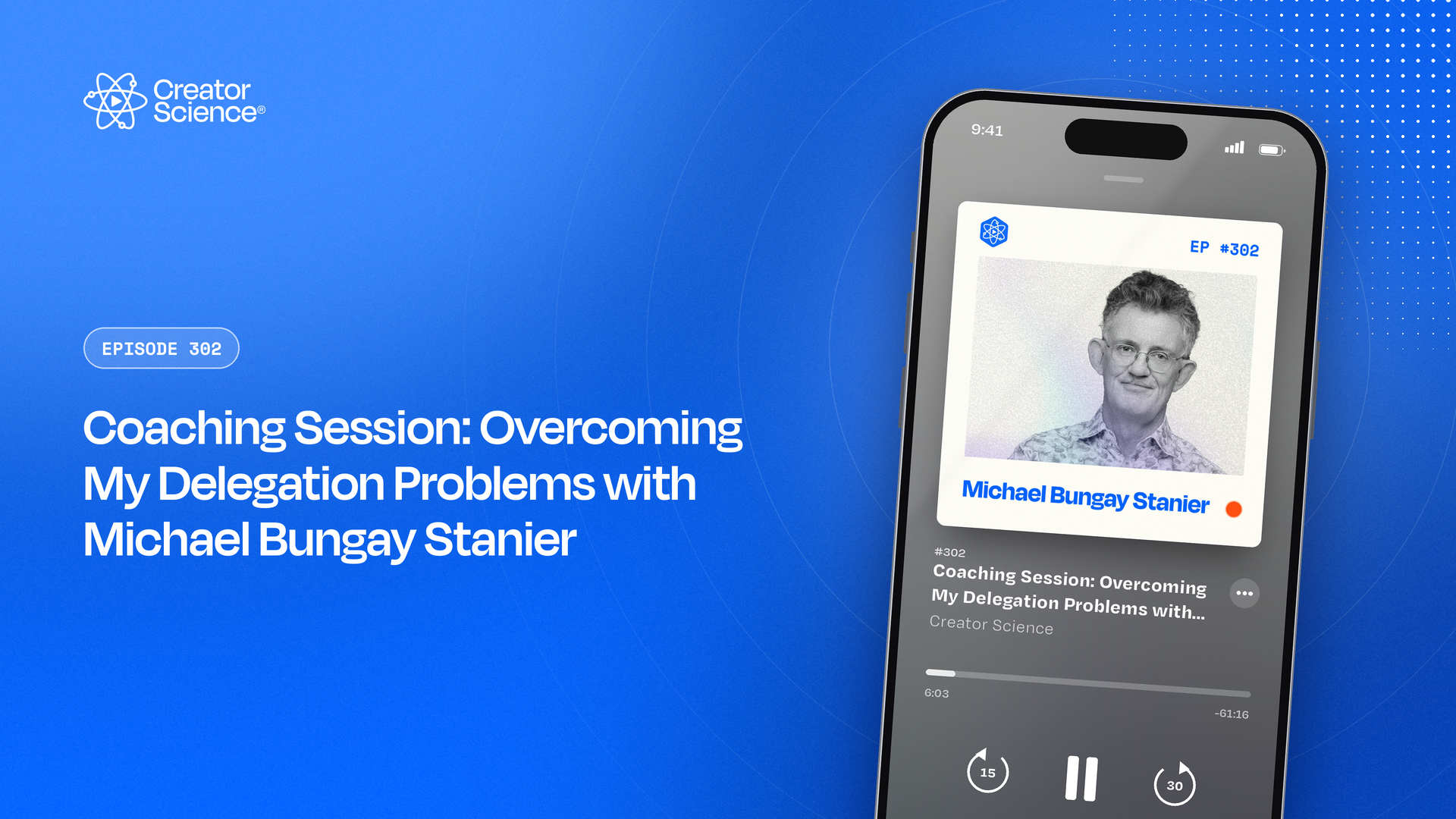
I began sharing in public about my desire to solve my hiring problems. That led to a public coaching session with coaching legend Michael Bungay Stanier (author of The Coaching Habit) in April 2026.
 Jay Clouse
Then, a combination of that podcast and my public declaration led to an essay on Substack by Anna Reich in May 2026.
 Anna Reich

In that essay, Anna not only showcased a deep understanding of my business (from the outside!), but also proposed an operational plan.
This is a far cry from most hiring pitches I receive, which focus on sharing a static portfolio and offering to "jump on a call some time to discuss" (also a draw on my time). Instead, Anna took on the upfront risk and clearly separated herself from all other candidates.
Within a couple of weeks, Anna had essentially hired herself as my Integrator.
I share all of this because, as I said at the start, I still don't think I'm great at hiring or team building. So far, the best thing I've done is hire Anna as my Integrator, and she's since done most of the team building, including leading a great hiring process to find our next YouTube editor/producer.
I think there's wisdom in the (differing) advice from everyone mentioned here:
- Barrett's advice to hire someone who impacts revenue
- Dan's advice to hire someone on commission and incenvitize them for proper alignment
- Angus's advice to hire a generalist before piling on specialists
- The Visionary/Integrator model proposed by Gino Wickman and EOS
I think it comes down to where you feel the most acute pain and whether you have the capital to fund a non-revenue-generating position right away. If you're in acute pain, it probably makes sense to be reactive in curing that pain. If you're not feeling acute pain but you have the funds to hire, be proactive in identifying what part(s) of the business you don't want to do anymore and get yourself out of it.
Most members of the Creator Science team actually hired themselves (like Anna). They identified a weakness in our business and took a lot of initiative to show me 1) what they can contribute and 2) what kind of impact it could have. One of the advantages of having a public brand is that you attract talented people to you.
Different people have different strengths. I've known many entrepreneurs who are true visionaries that thrive in hiring and empowering people to make their dreams come true. I still find myself often thinking (and acting) as an operator—spending my days in the weeds making things and delivering for customers personally.
I don't think either is right or wrong. The goal is just to hire whatever complements your own natural tendencies and round out your team's core competencies.
PS: My team is recording a podcast episode about how they're running the business while I'm on paternity leave. If you have a specific question about how we handle something on our team, submit it here to be included!
